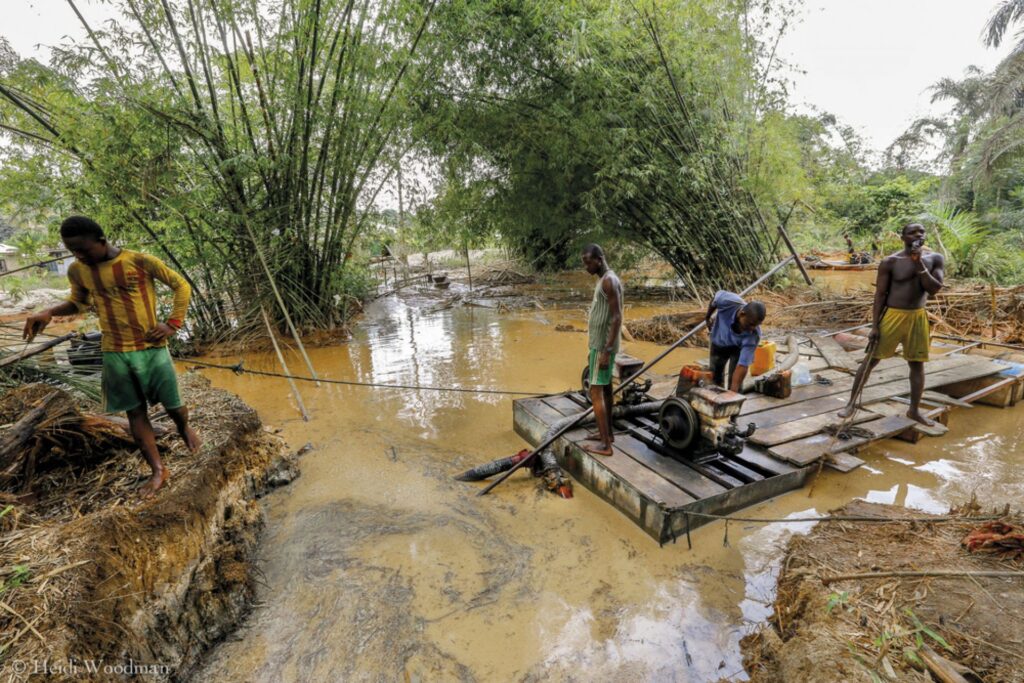
Galamsey, Ghana’s illegal mining sector, is a complex issue that’s deeply intertwined with the country’s economy and employment landscape. The dilemma for the government is that galamsey operators can earn up to GH¢300 a day, far exceeding the current minimum wage of GH¢21.77. This disparity makes it challenging for authorities to curb the practice, as many people, especially young individuals, are drawn to the lucrative opportunities.
Ellen Ama Daaku, an aide to Dr. Mahamudu Bawumia, suggests that increasing the minimum wage could be a solution, empowering galamsey operators to seek better employment alternatives. However, the issue goes beyond just wages. Galamsey has become a significant contributor to Ghana’s economy, with over a million people employed in the sector, and its destruction of farmland and water bodies has severe environmental and health implications .
The Galamsey Conundrum:
– Economic Benefits: Galamsey provides employment and income for millions, but it’s largely unregulated and untaxed.
– Environmental Costs: The practice has devastated Ghana’s water bodies, farmland, and forests, with estimated losses exceeding $2.3 billion annually.
– Social Impact: Galamsey has fueled violence, health issues, and human rights abuses, particularly affecting vulnerable communities.
Government’s Dilemma:
– Balancing Economic Needs: The government must weigh the benefits of regulating galamsey against the potential economic disruption to those employed in the sector.
– Environmental Protection: Authorities are under pressure to address the environmental destruction and health risks associated with galamsey.
– Finding Alternatives: The government needs to create viable alternative livelihoods and employment opportunities to reduce dependence on galamsey.
Ultimately, addressing galamsey requires a multifaceted approach, including policy reforms, law enforcement, and economic development initiatives.